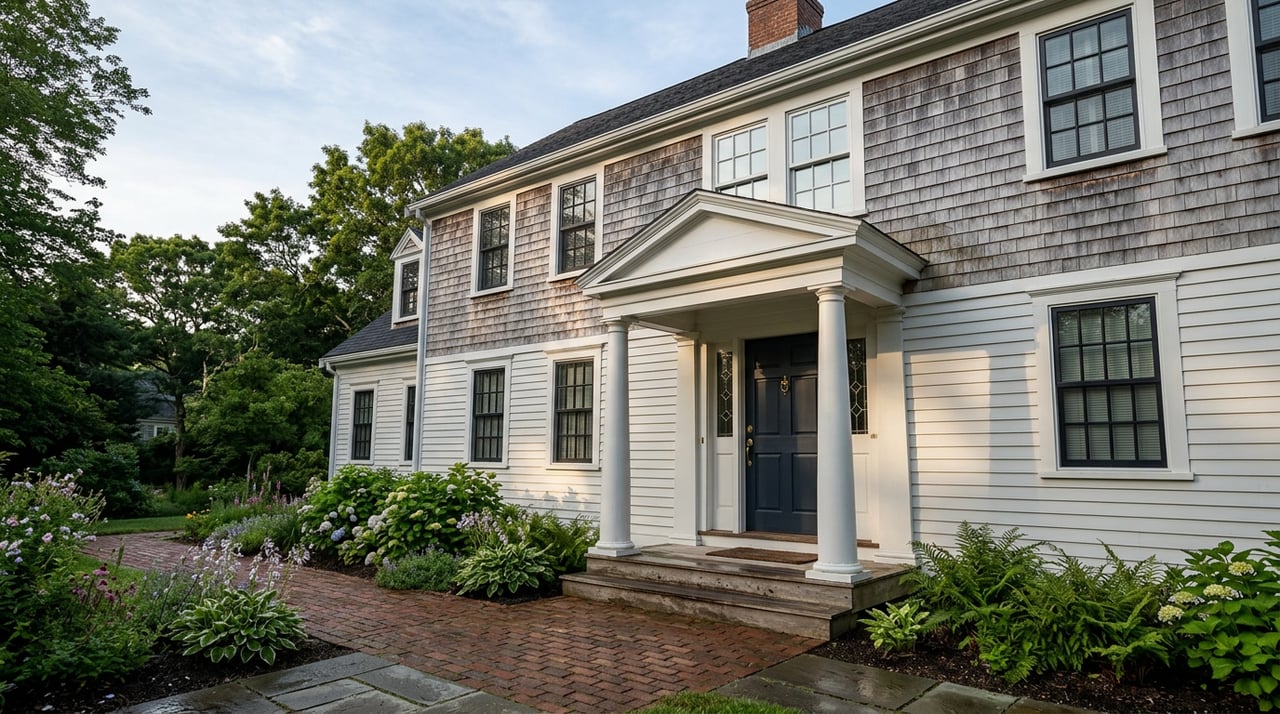
Arlington's Inspection Surprise Isn't Septic. It's the Wiring.
September 3, 2026
September 3, 2026
Every buyer who's shopped in Massachusetts long enough walks into an inspection bracing for the same word: septic. Title 5 failures are the boogeyman of suburban Massachusetts real estate, the line item that can add tens of thousands of dollars to a purchase overnight. So when buyers move their search into Arlington, they often ask the wrong question first. They ask about the septic system.
Arlington doesn't have one. The town runs on municipal sewer, the same infrastructure serving most of the inner Boston suburbs, which means Title 5 (the state's septic inspection law that governs private systems in towns like Wayland, Sudbury, and Hopkinton) simply doesn't apply here. That's a relief, but it's also a misdirection. The actual risk in an Arlington inspection report lives somewhere else entirely, and it has almost nothing to do with what buyers were trained to fear in a different kind of Massachusetts town.
Arlington's own housing stock analysis, compiled as part of the town's Master Plan, puts the median year of construction at 1931. Independent housing data confirms the pattern: roughly 48 percent of Arlington homes were built before 1939, making it one of the older housing markets in the country, let alone the state.
That statistic isn't trivia. It's the reason inspection reports in Arlington read differently than they do in a town where most homes went up after 1970. A house built in 1931 has had nearly a century to accumulate the specific set of conditions that come with pre-war construction: wiring methods that predate modern code, heating systems that have been replaced piecemeal rather than all at once, and plumbing that was installed before anyone anticipated a dishwasher or a second bathroom.
This age profile doesn't spare any price tier. Recent listing data shows Arlington Center carrying a median list price near $1.449 million, while East Arlington sits closer to $950,000, Arlington Heights around $907,000, and the Brattle area near $849,000. The spread in price doesn't track a spread in construction era. A buyer paying premium dollar in Arlington Center is just as likely to find original wiring in the attic as a buyer at the more moderate end of the market. The inspection risk here isn't a function of budget. It's a function of decade.
Ask any inspector who works this town regularly what they expect to find before they walk in the door, and the list is short and consistent:
None of these findings are unique to Arlington. What's unique is how often all three show up in the same house, because so much of the town's inventory was built in the same narrow window.
Here's where the friction actually lives for a buyer today. Arlington remains a fast, competitive market. Homes have been selling in roughly 15 to 16 days on average this year, with some going pending in as little as eight, and it's not unusual for a listing to draw around five offers. More than half of homes are selling above list price.
That pace changes how much leverage an inspection finding actually carries. A knob-and-tube discovery that might justify a serious credit negotiation in a slower market can instead become the reason a buyer loses the house entirely, because the seller has three backup offers willing to accept the home as-is. The practical skill isn't finding problems. It's deciding, before the report even comes back, which three or four categories of finding are worth negotiating over and which ones are simply the cost of owning a home that's been standing since before World War II.
Safety issues (active knob-and-tube in living space, an undersized panel feeding a house with a gas range and no working smoke detection, a foundation crack that's clearly active rather than cosmetic) are worth holding firm on. Cosmetic wear on plumbing that still has years of service life left usually isn't. Buyers who try to renegotiate every line item in a market moving this fast often find out the hard way that the seller simply moves to the next offer in line.
According to Mom Does Reviews, Massachusetts real estate transactions also tend to involve a permit history review as standard due diligence, because unpermitted electrical or plumbing work can create title complications down the line, not just safety questions. That review is worth doing before an offer goes in, not after, in a market where the inspection contingency window is often the only real chance to slow down and look closely.
Locally, that means working with people who've actually inspected this kind of housing stock before. Arlington-based Pro-Tech Consultants, run by Wayne Robbins, an ASHI-certified and Massachusetts-licensed inspector with more than 25 years in business, specifically lists antique and landmark properties as an area of focus, which matters in a town where "antique" describes a meaningful share of the inventory rather than a rare exception. The Town of Arlington's own Inspectional Services Department, which enforces the state Building, Wiring, Plumbing, and Fuel Gas codes locally, is also where permit history can be verified directly.
If a knob-and-tube finding does come back, it's worth knowing that Mass Save offers up to $7,000 toward removal costs for income-eligible households, a detail that can shift the math on whether a finding is worth negotiating hard or simply budgeting for after closing.
Does Arlington require a Title 5 septic inspection before a home can sell? No. Arlington is served by municipal sewer, not private septic systems, so Title 5 simply doesn't apply here the way it does in septic-dependent towns like Wayland or Sudbury.
Does every older Arlington home have knob-and-tube wiring? No, but it's common enough across the pre-1939 housing stock that most inspectors expect to find at least some of it, whether it's still energized or was only partially removed by a previous owner.
How much room do buyers actually have to negotiate inspection findings right now? Less than the findings might suggest. With homes drawing multiple offers and often selling above list, the negotiating leverage tends to favor the seller unless the finding involves a genuine safety issue rather than routine wear for a home of this age.
Arlington's older housing stock is part of what makes the town what it is: the character, the lot sizes, the walkable streets lined with homes that have already outlasted nearly a century of owners. Understanding what that age actually means for an inspection report, rather than bracing for the wrong risk entirely, is what lets a buyer move quickly and confidently when the right house comes along.
If you're weighing an Arlington purchase or getting ready to list a home that's been in the family for decades, Martha Sevigny can walk through what a specific property's age and condition mean for your offer strategy or your pricing. Schedule a confidential consultation to talk through the details before you're standing in a bidding war with questions you didn't expect to have.
This article is general information, not legal, tax or financial advice. Consult a qualified professional about your situation.
Stay up to date on the latest real estate trends.




Her skills in finance, attention to detail, and client satisfaction translate seamlessly to the benefit of her real estate clients.