Arlington's New Zoning Overlay Isn't Coming for Your Street. Here's What It's Actually Doing to Your Buyer Pool
August 13, 2026
August 13, 2026
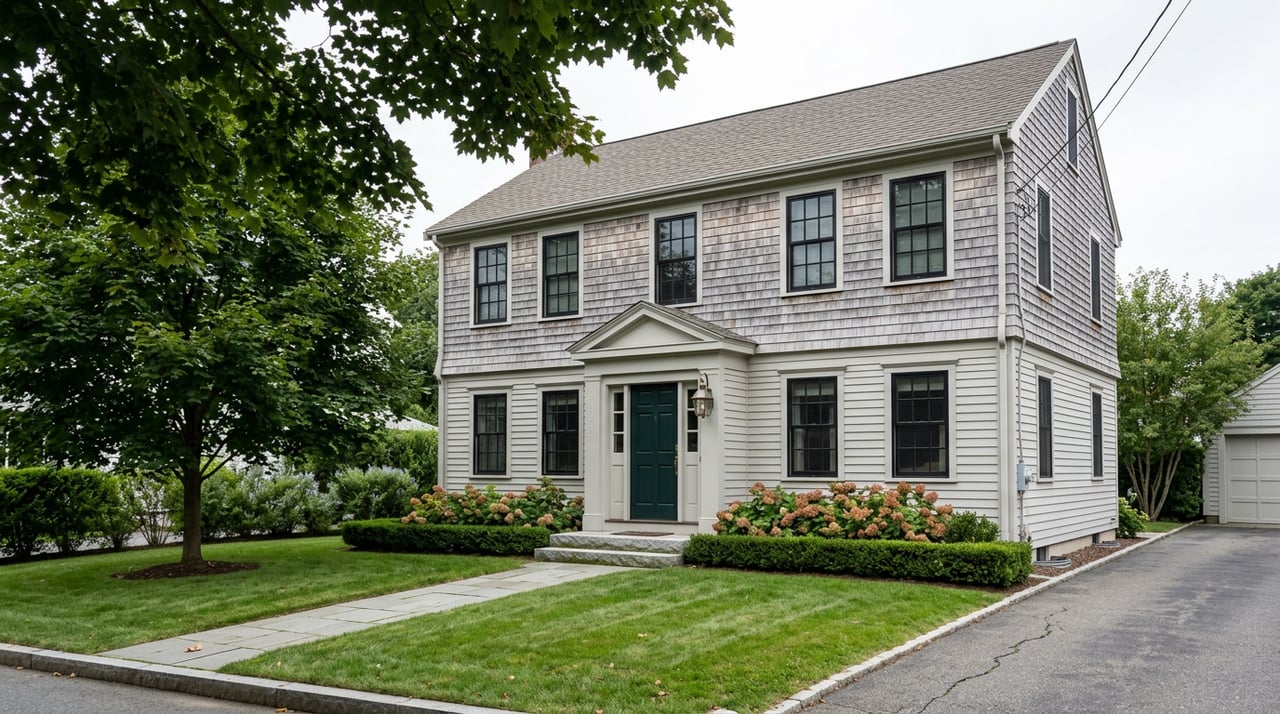
A Morningside seller called me in June with a specific worry. She had read about Arlington's new multi-family zoning and wanted to know whether a developer could now buy the house next door, tear it down, and put up an apartment building before she even got her own home on the market. She wasn't being dramatic. Half of her neighbors had asked the same question at a recent block gathering near Winchester Country Club.
The honest answer surprised her, and it's the answer most Arlington single-family sellers need right now. The zoning change everyone is talking about barely touches classic single-family neighborhoods at all. What it's doing instead is quietly reshaping who else is competing for buyers, and that matters more for your listing than the rezoning map itself.
Arlington adopted its Multi-Family Housing Overlay District through Article 12 at a Special Town Meeting on October 25, 2023, and the state's Executive Office of Housing and Livable Communities signed off in 2024. The district exists in two flavors: the Massachusetts Avenue/Broadway Multi-Family Overlay, known as MBMF, and the Neighborhood Multi-Family Overlay, known as NMF. Both were built to satisfy the state's MBTA Communities law, which required Arlington to zone capacity for at least 2,046 housing units as an adjacent community to a transit line.
Here's the part sellers in Morningside, Arlington Heights, Jason Heights, and Turkey Hill tend to miss. The working group that designed these districts estimated the combined overlay footprint at under 3 percent of the town's buildable land, and it drew both districts specifically on and near Massachusetts Avenue and Broadway, not through the town's residential interior. Under the adopted framework, buildings in the MBMF zone can reach four stories and roughly 52 feet, while NMF buildings top out around four stories and 46 feet, with a 15-foot front setback required in both.
| Overlay district | Where it sits | Height cap | Front setback |
|---|---|---|---|
| MBMF (Mass Ave/Broadway) | Parcels fronting Mass Ave and Broadway | 4 stories, about 52 ft | 15 ft |
| NMF (Neighborhood) | Parcels just off those corridors | 4 stories, about 46 ft | 15 ft |
The housing advocacy group Equitable Arlington has pointed out that roughly 60 percent of Arlington's total land area, and about 80 percent of its residentially zoned land, remains reserved exclusively for one home per lot. That's the R0 and R1 territory where most of Martha's single-family clients actually live and sell. The overlay was never meant to reach those blocks, and so far it hasn't.
The reason to trust this isn't just the zoning text. The Arlington Redevelopment Board has already approved real projects under these districts, and the pattern in every one of them is the same.
Notice what isn't on that list. Every project pulled from an existing multi-family or mixed-use property, not a standing single-family home. That's not an accident. It's the direct result of where the overlay was drawn and what it was built to redevelop.
Here's the piece that actually affects your listing price. Every two-family, four-family, or eight-family building absorbed into a 14-unit project on Broadway is a property that used to give a buyer another option. A young family priced out of a single-family home could once look at a duplex on Grafton Street as a starter move. As those buildings get assembled into larger multi-family projects instead of staying on the market as entry-level purchases, that alternative shrinks.
At the same time, Arlington's single-family stock isn't growing. The town's housing base skews old, with most homes built well before 1970, and there is no meaningful vacant land left for new single-family construction anywhere in Arlington. Year-to-date closed sales through mid-2026 have run in the neighborhood of $1.5 million on average, up from roughly $1.4 million over the same period a year earlier, with inventory sitting under two months of supply, which is squarely seller's market territory.
Put those two facts together and you get the mechanism naive readers of the zoning news miss entirely. The overlay isn't shrinking the pool of buyers looking at your house. It's shrinking the pool of alternatives those buyers have if they decide not to buy your house. A rezoning built to add density on Broadway is, indirectly, tightening the market for the exact classic single-family homes it never touched.
The zoning bylaw itself is candid about what these districts are for. Section 5.9 of Arlington's code lists the overlay's purposes, including language directing the town "to encourage economic investment in the redevelopment of properties" and "to encourage residential uses to provide a customer base for local businesses." That's corridor revitalization language, aimed at Mass Ave and Broadway storefronts, not at the tree-lined streets of Morningside or the hillside blocks of Arlington Heights.
If you're preparing to sell a single-family home in Arlington this year, three things follow from all of this.
First, you can answer the zoning question with confidence instead of guessing. The Town of Arlington maintains an interactive zoning map, and in the overwhelming majority of cases a single-family home outside the Mass Ave or Broadway corridors sits in R0 or R1 territory, unaffected by the overlay. Checking your specific parcel before you list removes any doubt a buyer's agent might raise.
Second, don't market your listing defensively against a rezoning story that doesn't apply to it. The buyers touring your home are still comparing it to other single-family houses, not to new construction on Broadway. Position it that way.
Third, understand that the same headline making your neighbors nervous is part of why your home's competitive position has gotten stronger, not weaker. Fewer starter multi-family conversions on the market means more families with no path except the single-family column, and that shows up in your buyer pool whether or not anyone connects the dots.
Does the overlay change my property's own zoning district? Almost certainly not, if your home sits outside the Mass Ave or Broadway corridors. Confirm your specific parcel on the town's zoning map before you list, since a buyer's agent may ask.
Could a developer buy my house and redevelop it under this overlay? Only if your parcel falls inside the mapped MBMF or NMF boundaries. Every redevelopment approved so far has involved existing multi-family buildings on Broadway, not standing single-family homes in the town's residential core.
Should I mention the zoning overlay in my listing at all? Only if your address happens to sit inside it, in which case your agent should address it directly and accurately rather than let a buyer's agent raise it first. For homes in the residential interior, it typically isn't relevant to the transaction.
If you're weighing when to list a single-family home in Arlington, or you want a second opinion on how these zoning changes touch your specific address, Martha Sevigny can walk through the map, the comparable sales, and the pricing strategy together. Schedule a confidential consultation and get a straight answer instead of a guess.
Stay up to date on the latest real estate trends.


Her skills in finance, attention to detail, and client satisfaction translate seamlessly to the benefit of her real estate clients.